What Happens on a FREC 4 Course? A Day-by-Day Breakdown
If you’re looking at booking a FREC 4 course, you’re probably wondering what the jump from FREC 3 actually looks like.
This guide breaks down exactly what happens each day and what to expect before you start.
FREC 4 builds on what you already know and takes it further. It’s more clinical, more detailed, and puts more responsibility on you as a responder.
What is a FREC 4 course?
The FREC 4 (First Response Emergency Care Level 4) qualification develops your ability to assess and manage patients in more complex situations.
It’s commonly taken by:
Event medical staff moving into higher responsibility roles
Responders working towards ambulance or pre-hospital careers
You move from following a structure to understanding why you’re doing it and adapting your approach.
How the FREC 4 course builds across the week
The course is practical throughout, but with more clinical thinking required.
Here’s how it progresses:
Day 1: Clinical foundations and assessment
Day 2: Cardiac, ECG and paediatrics
Day 3: Trauma, respiratory and more complex scenarios
Day 4: Sepsis, mental health and major incidents
Day 5: Advanced scenarios, exams and clinical skills
Scenarios run throughout the week and become more detailed, with greater expectation on your reasoning and decision-making.
Day 1 – Clinical foundations and assessment
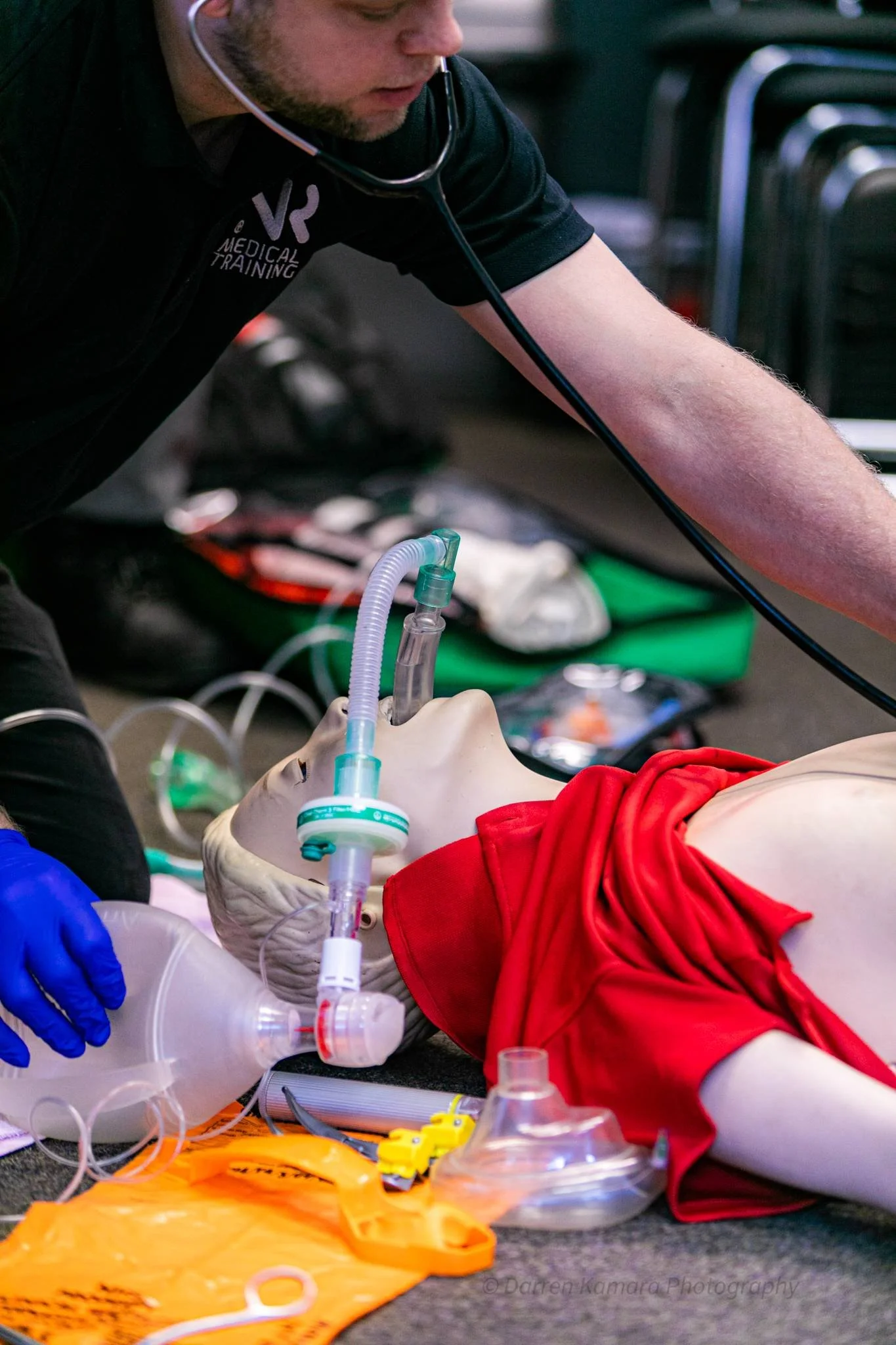
Day one sets the tone early.
There’s a strong focus on:
anatomy and physiology
patient assessment and history taking
physiological observations
immediate life support
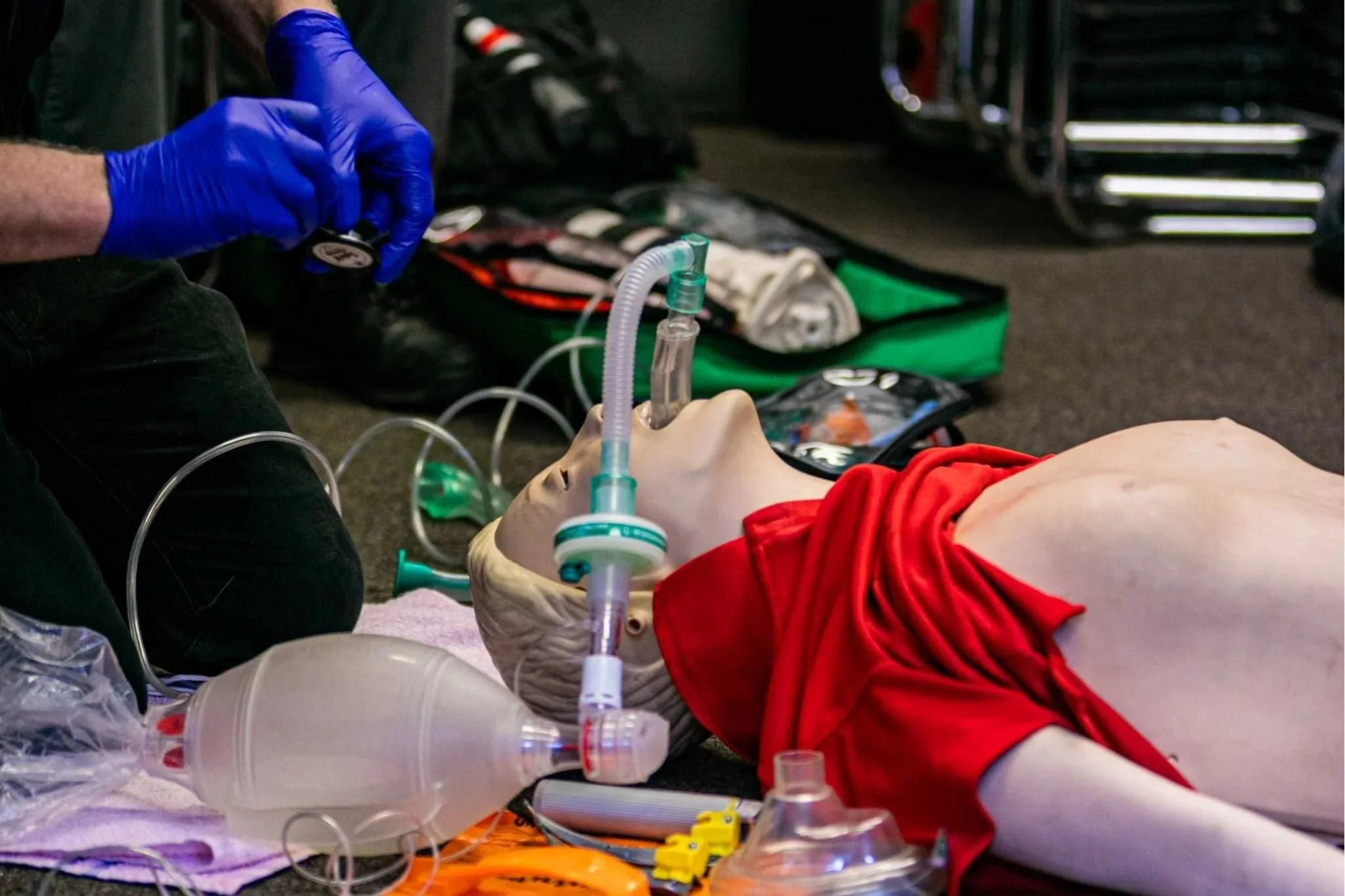
airway management (including supraglottic airways)
medical gases
You’ll be assessed on practical skills early, including observations and ILS.
What it feels like:
More clinical than FREC 3 from the start
Higher expectations around accuracy
Less “step-by-step”, more understanding
Day 2 – Cardiac, ECG and paediatrics
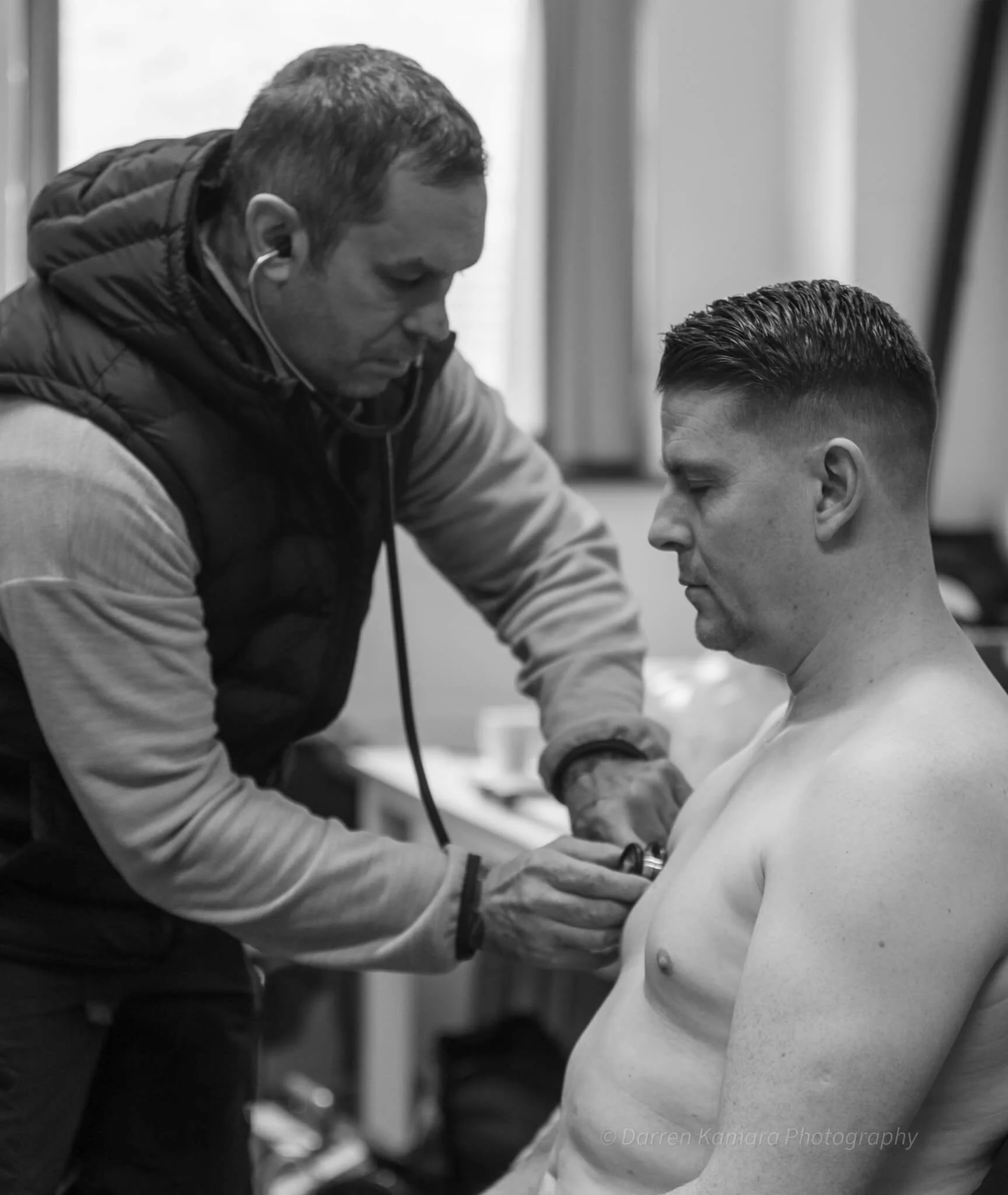
Day two introduces a big step up in clinical knowledge.
You’ll cover:
cardiac conditions
ECG recognition and interpretation
STEMI, PE and hypotension scenarios
paediatric assessment and development
recognising deterioration in children
This is where many learners start to realise the level expected at FREC 4.
What it feels like:
More technical
More thinking required
Less about memorising, more about understanding
Day 3 – Trauma, respiratory and increasing complexity
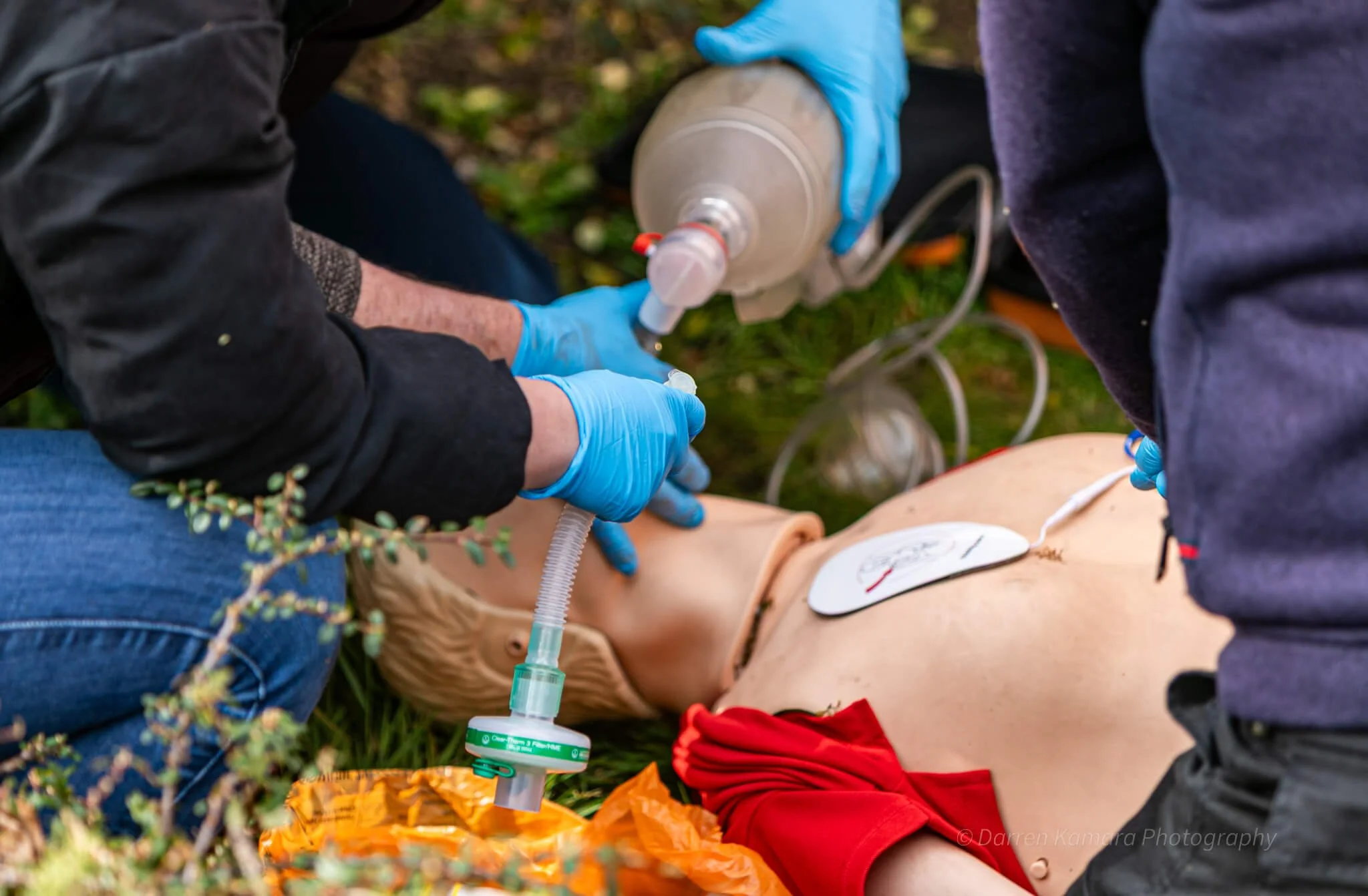
Day three brings together trauma and clinical reasoning.
You’ll cover:
mechanisms of injury and trauma assessment
respiratory conditions and chest injuries
complex trauma scenarios (e.g. penetrating trauma, femur fractures)
patient management under pressure
You’ll also complete trauma-based practical assessments.
What it feels like:
Faster pace
More pressure
Greater expectation to lead
Day 4 – Sepsis, mental health and major incidents
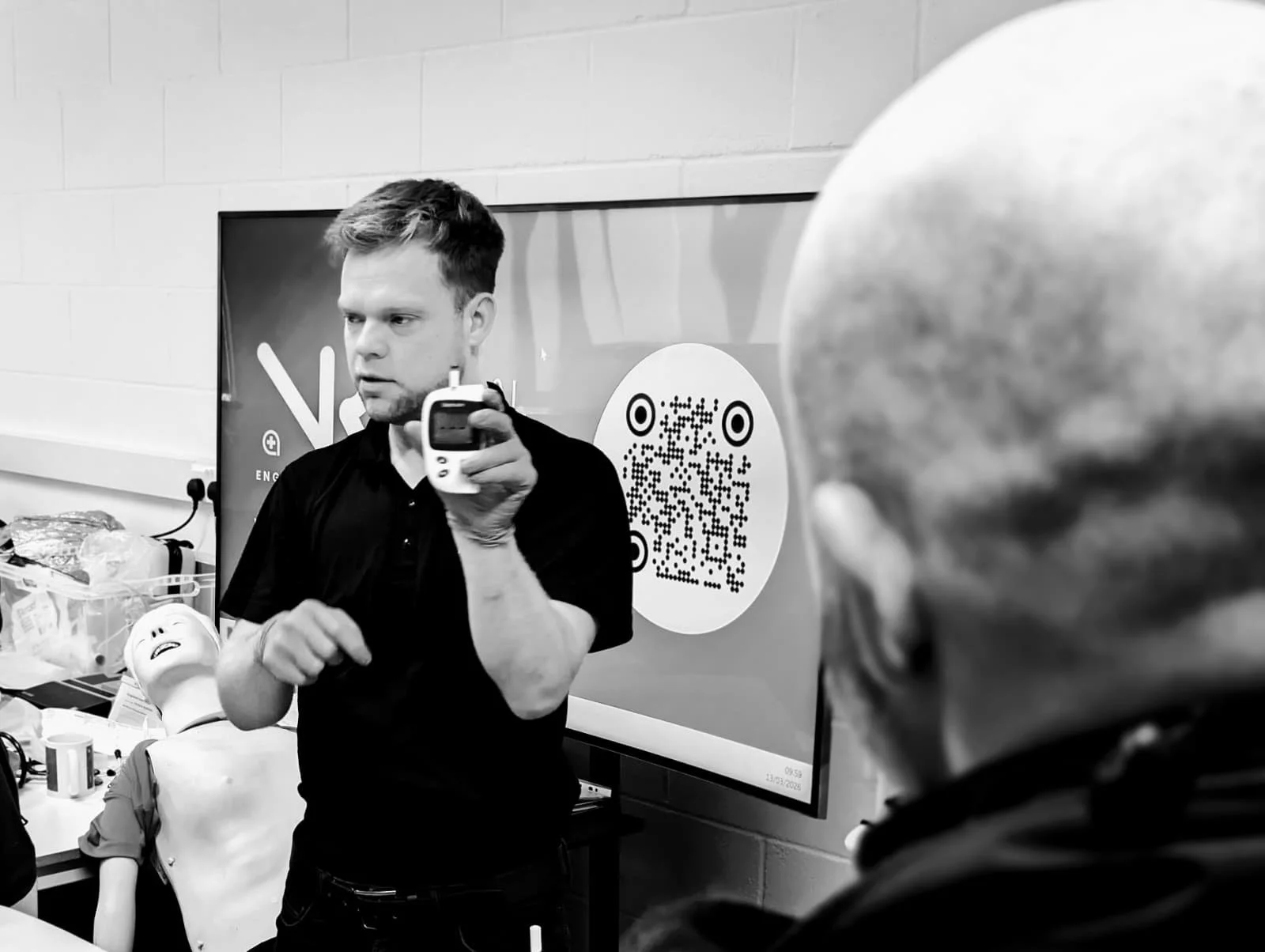
Day four broadens your scope.
You’ll cover:
sepsis and recognition of deterioration
mental health crisis response
stroke and neurological presentations
major incidents, triage and METHANE
working within multi-agency environments
This is where the role starts to feel more like real-world response work.
What it feels like:
Wider clinical exposure
More decision-making responsibility
Thinking beyond one patient
Day 5 – Advanced scenarios, exams and clinical skills
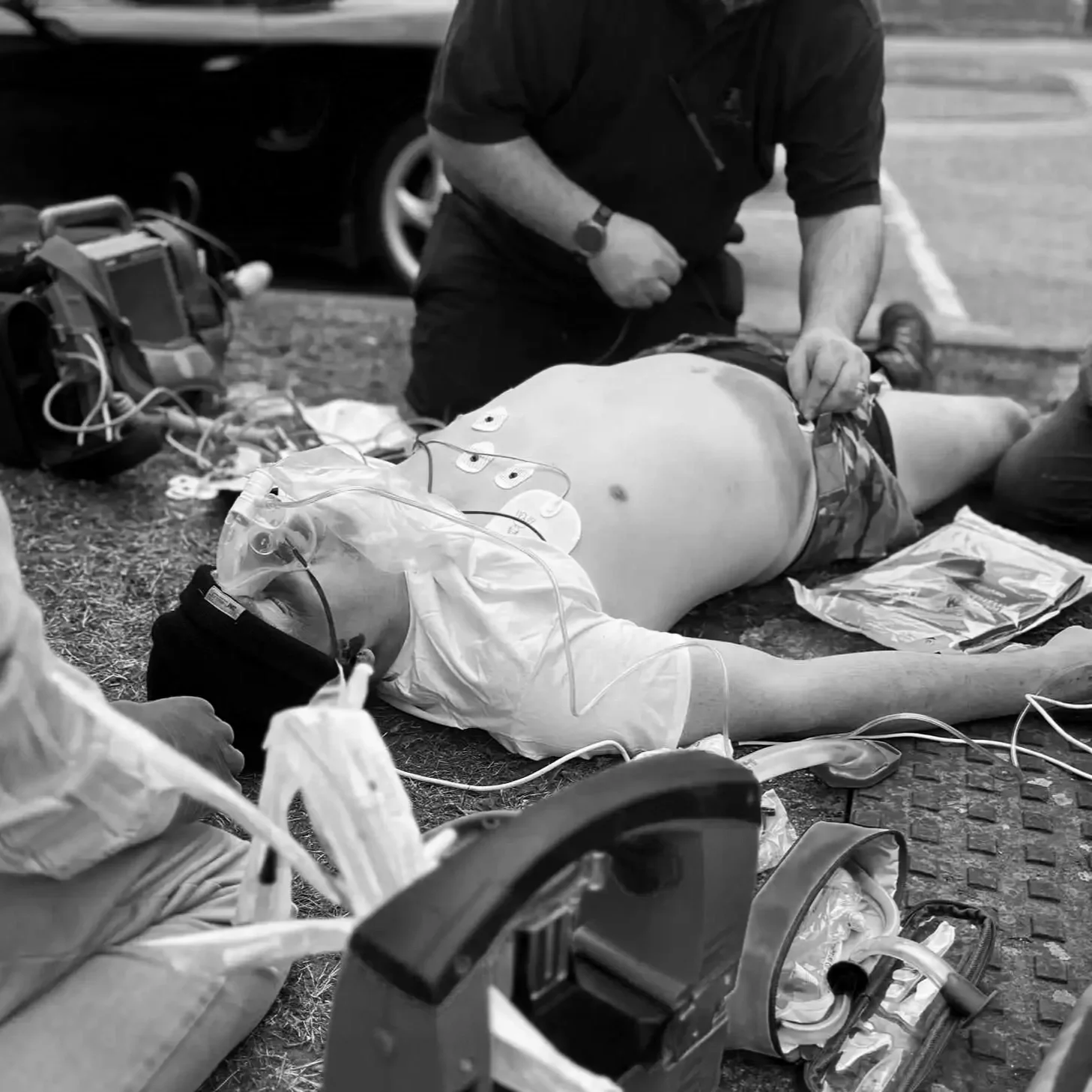
The final day focuses on pulling everything together.
You’ll complete:
complex medical scenarios (e.g. AAA, ectopic pregnancy)
maternity care
ECG invigilated exam
applied anatomy and physiology exam
assisting with clinical interventions (airway, vascular access support)
This reflects the final stage of the course, combining knowledge, skill and decision-making.
What it feels like:
Demanding but structured
More independence
A clear step up in confidence by the end
What happens after the 5-day course? (Workbooks and consolidation)
FREC 4 doesn’t end when the five classroom days finish.
After the course, you’ll complete three workbooks that build on what you’ve covered during the week. You’ll have up to 12 months to complete these, so there’s time to work through them properly alongside your other commitments.
The workbooks typically include:
Case studies based on realistic scenarios
Questions around patient assessment and decision-making
Applying anatomy and physiology in context
Written explanations of your clinical reasoning
The aim isn’t to catch people out.
It’s there to give you time to think things through properly, rather than making decisions under pressure in a live scenario.
Support is available throughout, including:
Phone
Email
Teams meetings
So you’re not left to figure it out on your own.
What it feels like:
A chance to slow things down and reflect
Reinforcing what you’ve already learned
Building confidence in your understanding, not just your actions
It’s a key part of making sure you leave the course with more than just a certificate.
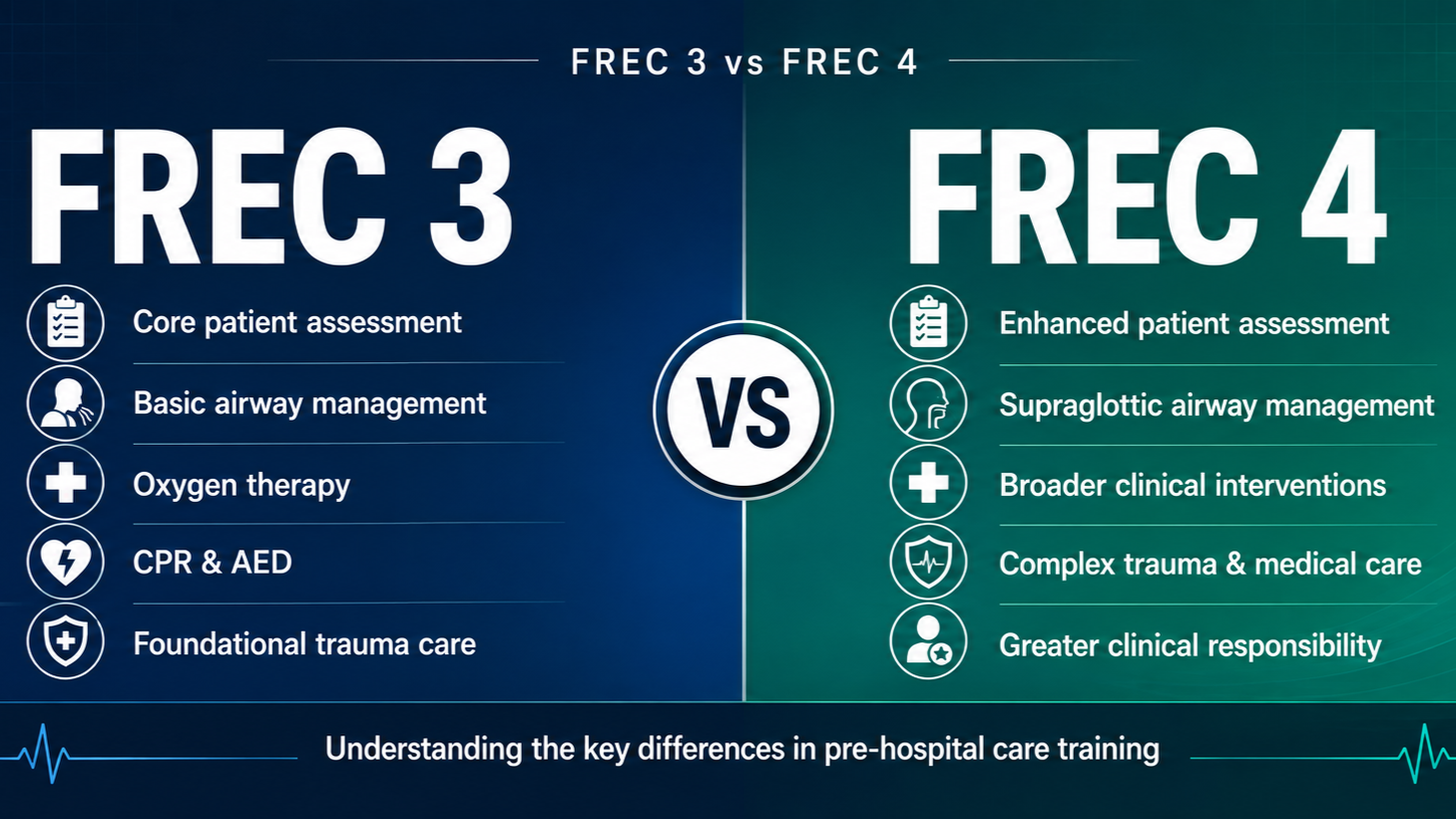
How FREC 4 is different from FREC 3
The biggest shift is not just skills, it’s thinking.
At FREC 4:
you’re expected to understand the why, not just the what
patient assessment becomes more detailed
decisions carry more weight
scenarios require reasoning, not just action.
If you want a clearer side-by-side comparison, you can read our guide on
FREC 3 vs FREC 4: What’s the Difference and Which Should You Choose? >
How we make FREC 4 realistic
Throughout the course, we use:
Scenario-based training
High-quality moulage
Clinicians acting as patients
Clinician-led instruction
This allows us to build realistic situations while keeping learning controlled and safe.
Common concerns before a FREC 4 course
The jump from FREC 3
This is a step up. That’s expected. The course is designed to build you into it.
ECGs and clinical knowledge
These are new for many learners. They’re taught from the ground up and reinforced throughout the week.
Being assessed more closely
There is more observation and assessment, but it’s introduced gradually as you develop.
How confidence typically develops
Most learners follow a similar pattern:
strong start (building on FREC 3)
dip when complexity increases
gradual improvement
strong finish
By the end, most learners are thinking and working at a much higher level than when they started.
How to prepare for a FREC 4 course
To get the most out of it:
revise anatomy and physiology
refresh your FREC 3 knowledge
look at basic ECG concepts
understand patient assessment frameworks
To see more about the CPD requirements you need to do before your course, read our blog >
If you’re deciding whether a FREC 4 course is right for you, understanding how it runs day to day makes that decision much easier.
Final thought
A good FREC 4 course should feel like progression, not repetition.
By the end of the five days, you should have:
a deeper understanding of patient assessment
stronger clinical reasoning
more confidence managing complex situations
FREC 4 Course – Frequently Asked Questions
These are some of the most common questions we get from learners before starting a FREC 4 course.
-
In most cases, yes.
FREC 4 builds directly on the knowledge and structure taught in FREC 3. However, if you already hold a relevant qualification or have suitable experience, it may be possible to go straight to FREC 4.
-
It’s a step up from FREC 3.
The course introduces more clinical content and requires a deeper level of understanding. Most learners find it more challenging, but also more rewarding.
-
FREC 4 is a Level 4 qualification, which is broadly equivalent to the first year of higher education.
It reflects the increased clinical knowledge and responsibility expected at this level.
-
FREC 4 involves a significant amount of pre-course study. You will be provided with your pre-course reading when you book a course. In addition, you will need to provide us 118 hours of CPD. Have a look at our blog on CPD for more information on this here >CLICK HERE<
This often includes areas such as anatomy and physiology, patient assessment, ECG basics and recognising deterioration, helping you get the most out of the practical sessions.
-
Assessment includes:
practical skills assessments
scenario-based assessments
ECG recognition exam
applied anatomy and physiology exam
These are designed to assess both your knowledge and your ability to apply it in realistic situations.
-
Yes.
After completing the five-day course, you’ll need to complete three workbooks that build on what you’ve covered during the week.
You’ll have up to 12 months to complete them, so there’s time to work through everything properly alongside your other commitments.
The workbooks are based on realistic scenarios and are designed to develop your understanding, not just test it.
You’ll also have ongoing support throughout, including:
phone
email
Teams meetings
So you’re not left to figure it out on your own.
-
The biggest difference is clinical understanding.
At FREC 3, you learn what to do.
At FREC 4, you’re expected to understand why you’re doing it and adapt your approach based on the patient. -
That’s not unusual.
FREC 4 is designed to challenge you. The course builds gradually, and most learners improve as the week goes on, even if certain areas feel difficult at first.
-
FREC 4 supports progression into more advanced roles, including:
higher-responsibility event medical work
close protection medical support
pre-hospital care environments
It can also support progression towards ambulance or healthcare roles, depending on your pathway.