FREC 3 vs FREC 4: What’s the Difference and Which Should You Choose?
If you’re looking at getting into pre-hospital care training, one of the most common questions is:
Should I do FREC 3 or FREC 4?
On paper, they can look similar. In reality, they’re very different in terms of level, expectation and responsibility.
This guide breaks it down clearly so you can decide which one is right for you.
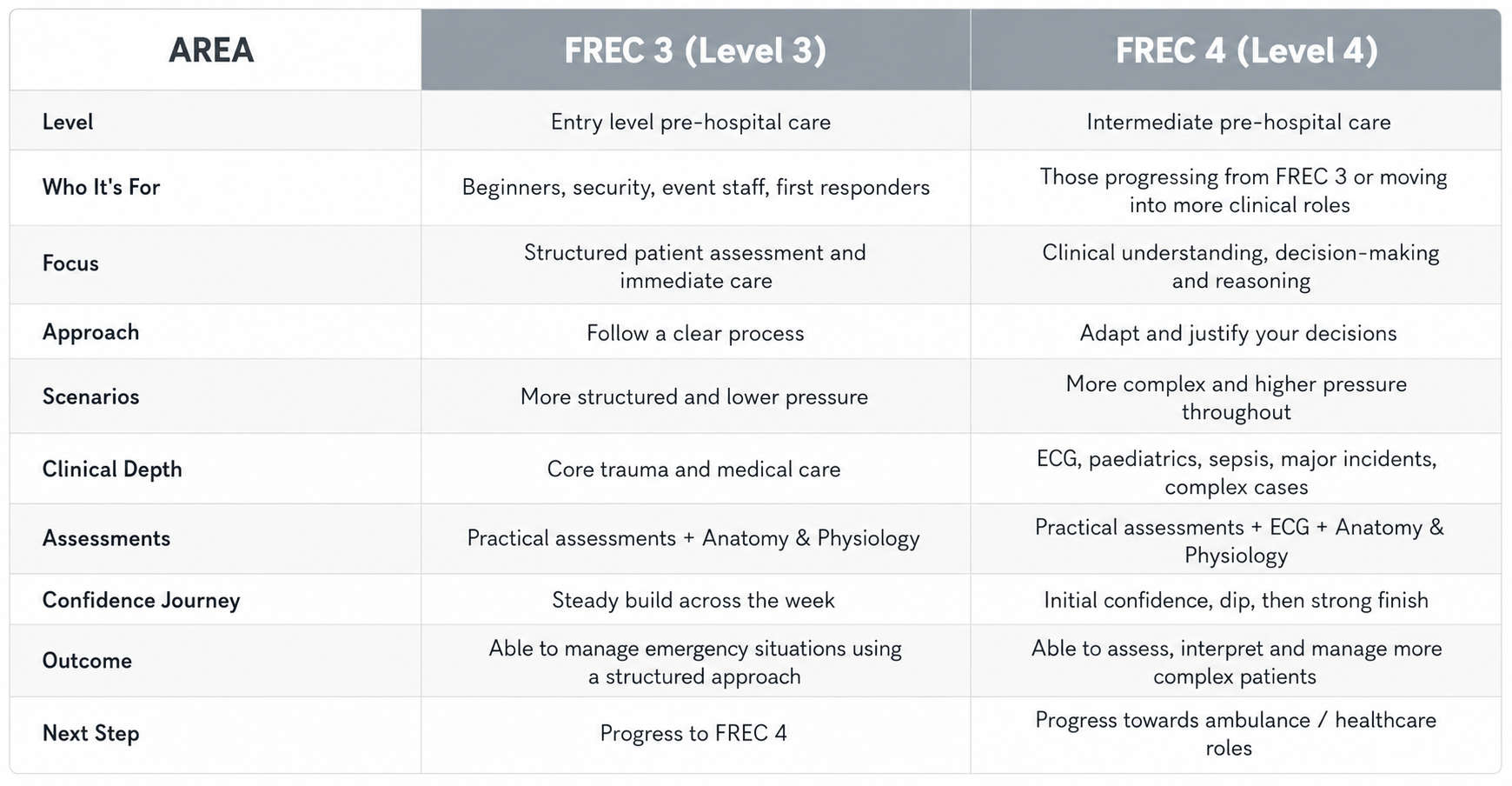
If you want a quick side-by-side comparison before going into detail, here’s how FREC 3 and FREC 4 differ:
What is FREC 3?
FREC 3 (First Response Emergency Care Level 3) is the entry point into pre-hospital care.
It’s designed to give you:
a structured approach to patient assessment
the ability to manage life-threatening conditions
confidence working in emergency situations
It goes beyond first aid, but it is still a foundation-level course.
What is FREC 4?
FREC 4 (First Response Emergency Care Level 4) builds directly on FREC 3.
It develops:
clinical understanding
patient assessment at a deeper level
decision-making in more complex situations
At this level, you’re expected to understand why you’re doing things, not just follow a process.
The key difference
FREC 3 = doing the right things in the right order
FREC 4 = understanding, adapting and making decisions
Level and difficulty
FREC 3
Entry level
Suitable for beginners
Builds confidence quickly
Structured and guided
FREC 4
Higher level (Level 4 qualification)
Requires prior knowledge (usually FREC 3)
More clinical
Higher expectations
How the courses feel day to day
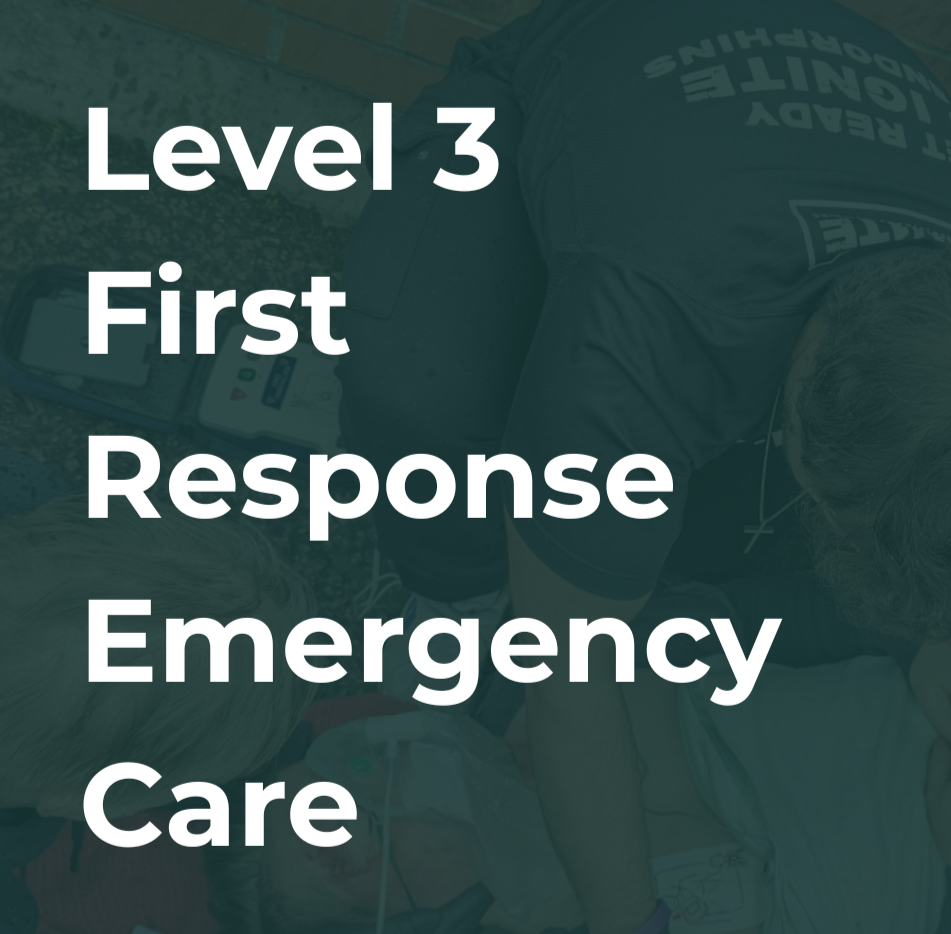
FREC 3
Starts steady
Builds gradually
Scenarios increase in pressure across the week
Strong focus on structure and approach
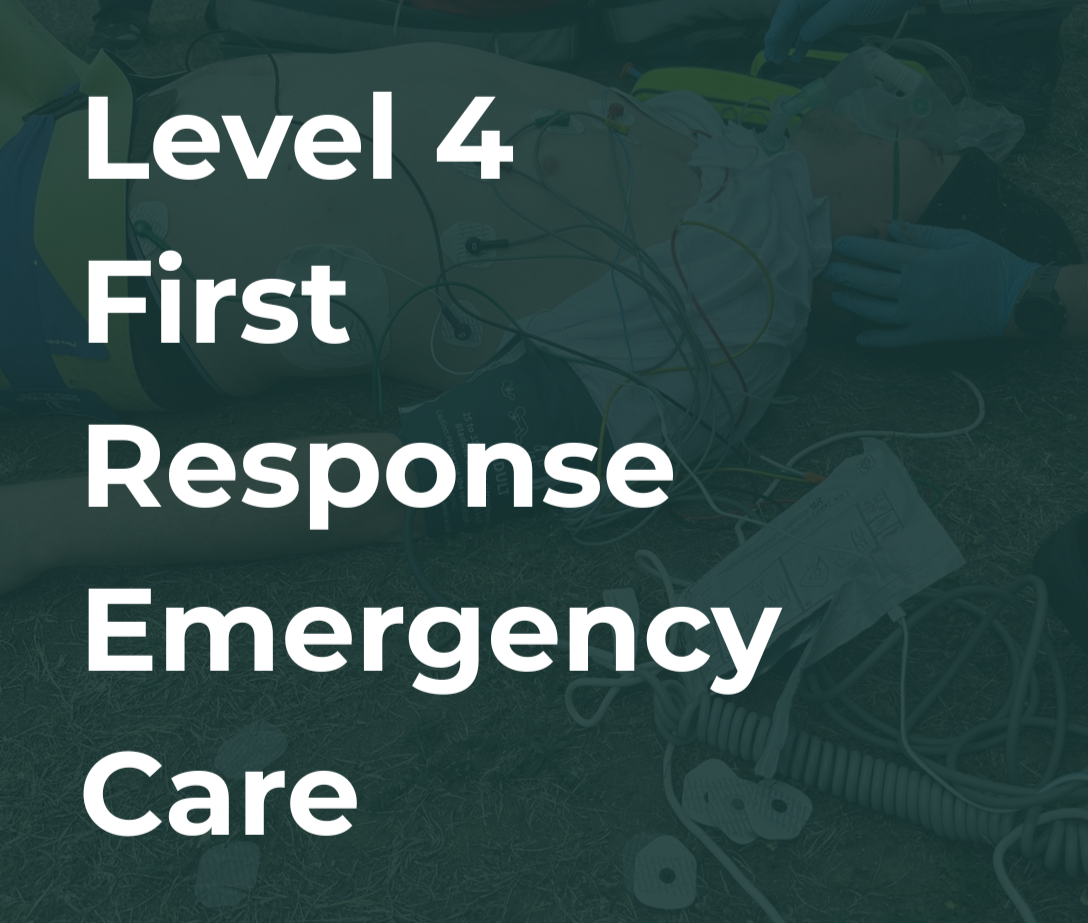
FREC 4
Starts at a higher level from day one
More clinical content early on
Scenarios require more thinking and reasoning
Greater expectation to lead and justify decisions
Clinical content and skills
FREC 3 focuses on:
primary and secondary survey
catastrophic bleeding
airway management basics
BLS and AED
trauma and medical emergencies
FREC 4 adds:
ECG recognition
deeper anatomy and physiology
complex trauma assessment
sepsis and major illness
major incident response and triage
assisting with clinical interventions
Decision-making and responsibility
This is one of the biggest differences.
FREC 3
Follow a clear structure
Recognise problems
Take appropriate action
FREC 4
Interpret findings
Make decisions based on clinical understanding
Adapt to changing situations
Think ahead
Common challenges
FREC 3
moving beyond first aid
learning a structured approach
building confidence in scenarios
FREC 4
increased clinical depth
ECG understanding
higher expectations during scenarios
being able to explain your decisions
Who should take FREC 3?
FREC 3 is right if you:
are new to pre-hospital care
work in security, events or care and need a higher level of training
want to build confidence before progressing
Who should take FREC 4?
FREC 4 is right if you:
have completed FREC 3
want to progress into more clinical roles
need a higher level of responsibility in your work
are working towards ambulance or healthcare roles
Can you go straight to FREC 4?
In most cases, no.
FREC 3 provides the foundation that FREC 4 builds on. Without that base, FREC 4 will feel overwhelming rather than challenging. There are however some instances where you may be able to use prior experience or qualifications to go straight to FREC 4.
How confidence develops
FREC 3
low starting confidence
steady build
strong finish
FREC 4
higher starting point
noticeable dip as complexity increases
strong finish with deeper understanding
How we deliver both courses
Across both FREC 3 and FREC 4, we focus on:
scenario-based training
high-quality moulage
clinicians acting as patients
gradual increase in pressure
The aim is always the same:
to prepare you for real situations, not just assessments
Which course should you choose?
Start with FREC 3 if you’re new to pre-hospital care or haven’t completed an equivalent qualification
Choose FREC 4 if you’ve already completed FREC 3 or hold a relevant prior qualification
In some cases, you may be able to go straight to FREC 4 depending on your background
Final thought
Both courses have their place.
FREC 3 builds the foundation
FREC 4 builds the understanding
Done properly, they work together to develop confidence, capability and decision-making in real-world situations.
FREC 3 vs FREC 4 – Frequently Asked Questions
These are some of the most common questions we get from learners deciding between FREC 3 and FREC 4.
-
In most cases, you’ll need to complete FREC 3 first.
However, if you already hold a relevant qualification or have suitable experience, it may be possible to go straight to FREC 4. This is usually assessed on a case-by-case basis.
-
Yes, it’s a step up.
FREC 3 focuses on building a structured approach to patient care.
FREC 4 builds on that by introducing more clinical knowledge and decision-making.Most learners find it more challenging, but also more rewarding.
-
Both courses are typically delivered over five days.
FREC 4 also involves additional pre-course study to prepare for the increased level of clinical content.
-
No.
FREC 3 is designed for people with no prior medical background. It starts from the basics and builds up over the five days.
-
After FREC 3, you can:
work in roles such as event medical or security response
act as a workplace first aider at a higher level
progress on to FREC 4
-
FREC 4 develops your ability to manage more complex patients and situations.
It’s often used by those working in:
close protection
event medical roles
pre-hospital environments
It can also support progression into ambulance or healthcare roles.
-
It depends on what you want to do.
FREC 3 is enough for many roles and provides a strong foundation
FREC 4 is the next step if you want more clinical responsibility and progression
-
If you’re comfortable with the core structure taught in FREC 3 and can confidently work through patient assessments, you’re usually ready to progress.
FREC 4 builds on that foundation rather than repeating it, so being confident with the basics makes a big difference.
-
It’s normal to find parts of both FREC 3 and FREC 4 challenging.
The courses are designed to build gradually, with support throughout. Most learners improve as the week goes on, even if they find certain areas more difficult at first.